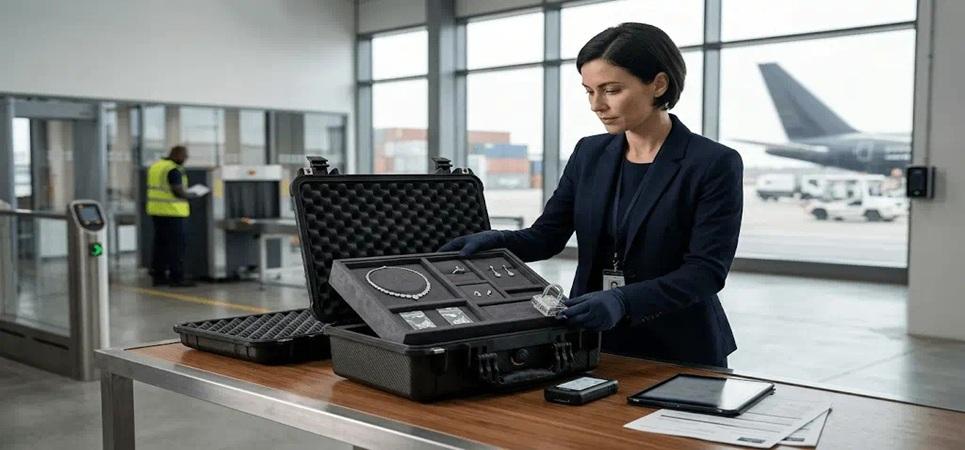
Behind every precious stone lies a journey that demands precision, discretion, and exceptional care. Discover how high-value jewelry moves across international borders, and why specialist logistics matters.
For diamond dealers, jewelry manufacturers, retailers, wholesalers, and exhibition organizers, moving valuable goods internationally is about far more than getting a package from one destination to another. It requires careful planning, controlled handling, reliable coordination, and an uncompromising focus on security. As the global jewelry trade continues to connect suppliers, trading hubs, retail markets, and international exhibitions, one question becomes increasingly important: How do you move exceptional value across borders with confidence?
The answer begins with understanding the unique demands of high-value jewelry logistics.
One of the most distinctive characteristics of the diamond and jewelry industry is the relationship between physical size and financial value. A shipment weighing only a few grams may represent a significant commercial investment. Whether it contains loose diamonds, luxury watches, precious gemstones, or finished jewelry, its value can far exceed what its size or weight might suggest.
This creates a different set of logistical requirements.
Conventional shipping arrangements may not provide the specialized handling, shipment controls, security procedures, and visibility that valuable goods require. Businesses must consider not only transportation time and cost, but also the level of protection and accountability throughout the journey. For this reason, high-value jewelry transportation calls for a carefully designed logistics process, one that recognizes that every shipment has its own commercial importance and risk profile.
The journey of a valuable shipment starts long before it reaches an airport, customs facility, or international trading hub. Proper preparation at the point of collection helps establish the foundation for a smooth and controlled transportation process. Depending on the shipment, this may involve verifying shipment details, preparing appropriate packaging, confirming the required documentation, and coordinating collection and delivery arrangements.
Clear communication between the shipper, logistics provider, recipient, and other relevant parties is equally important. When responsibilities and delivery expectations are established in advance, businesses can reduce avoidable complications and maintain better oversight of their shipments. For high-value goods, preparation is not simply an administrative step. It is an essential part of managing the journey.
International jewelry shipments often involve multiple regulatory and administrative requirements. Customs procedures, declarations, supporting documents, duties, taxes, and destination-specific import rules can all influence how quickly goods move across borders.
Incomplete paperwork or inaccurate shipment information may result in additional checks, delays, unexpected expenses, or missed commercial deadlines.
These challenges can become particularly disruptive when jewelry is being transported for a product launch, private client appointment, seasonal retail campaign, or international trade exhibition. Effective international logistics therefore requires more than arranging transportation. It also requires advance preparation, accurate documentation, and an understanding of the applicable requirements in both the country of origin and the destination. By addressing these considerations early, businesses can better anticipate potential obstacles and support a more predictable shipping experience.
Few situations demonstrate the complexity of high-value logistics more clearly than an international jewelry exhibition. Imagine a collection of diamonds and fine jewelry travelling from a trading center to an exhibition venue thousands of miles away. The shipment must arrive within a defined window, complete the necessary customs procedures, and be delivered according to the organizer's access and security requirements.
But arrival is only one part of the operation. After the exhibition, the items may need to be collected, transported to a secure location, returned to their original destination, or forwarded to another market. Every stage must be considered before the journey begins. This is why exhibition logistics benefits from a complete, end-to-end plan that accounts for collection, international transportation, customs requirements, venue delivery, post-event collection, and onward or return movement. When timing is critical and valuable merchandise is involved, detailed coordination can make a meaningful difference to the overall experience.
When transporting diamonds and fine jewelry, security must be considered throughout the entire shipment lifecycle, not simply at the point of departure or final delivery. The appropriate arrangements depend on the value, nature, route, destination, and specific requirements of each shipment. Depending on the service selected, these may include controlled handling procedures, restricted access, shipment monitoring, documented custody transfers, and specialized transportation arrangements. Discretion is another important consideration. Businesses moving valuable merchandise may need to limit unnecessary exposure of shipment details while ensuring that authorized parties receive the information required to coordinate delivery effectively.
Visibility also matters. Knowing the status of a shipment, understanding its expected arrival, and having access to the appropriate communication channels can help businesses plan with greater confidence. Specialist providers in the high-value logistics sector, including Loomis International, serve the diamond and jewelry industry with solutions designed around the particular requirements of valuable goods. The broader principle is clear: security, discretion, and coordination should be built into the transportation process from the outset.
Modern logistics increasingly depends on timely information as much as physical transportation.
For jewelry businesses operating across different markets, reliable communication and shipment visibility can support better inventory planning, customer coordination, and commercial decision-making.
When businesses can obtain appropriate status updates and communicate effectively with their logistics provider, they are better positioned to manage delivery expectations, prepare for important events, and respond to unexpected changes. Technology does not eliminate every transportation risk, and visibility alone does not guarantee security. However, when combined with sound operating procedures and experienced logistics coordination, it can help create a more informed and manageable shipping experience. The objective is not simply to move a shipment faster. It is to help businesses manage the entire process more effectively.
Selecting a logistics provider for high-value jewelry requires careful consideration.
Beyond transportation costs and estimated delivery times, businesses should evaluate the provider's experience with valuable goods, security arrangements, international coverage, customs support, communication practices, and ability to coordinate specialized delivery requirements.
It is also important to understand exactly what each service includes. Security measures, insurance arrangements, liability limits, tracking capabilities, and customs responsibilities can vary by provider and service agreement. Asking the right questions before shipping helps establish clear expectations and reduces the likelihood of misunderstandings later. For jewelry businesses, the right logistics relationship should support more than the movement of merchandise. It should contribute to operational confidence, dependable coordination, and the ability to serve customers across international markets.
The international jewelry trade depends on trust. Diamonds and fine jewelry connect miners, manufacturers, traders, retailers, collectors, and customers across a global network of commercial relationships. Every shipment plays a part in that network.
Behind a successful delivery is a process that brings together preparation, transportation, compliance, security, communication, and careful coordination. When these elements work together, businesses can approach international shipping with greater clarity and confidence.
At KM Courier Inc., we recognize the importance of dependable logistics in a world where timing, service, and trust matter. Our commitment is to help businesses understand their shipping needs and explore practical transportation solutions suited to their requirements.
Whether you are planning routine business shipments, coordinating deliveries across multiple locations, or preparing for an important commercial deadline, thoughtful logistics planning is an essential first step.
Because when a shipment carries exceptional value, every detail of its journey matters.