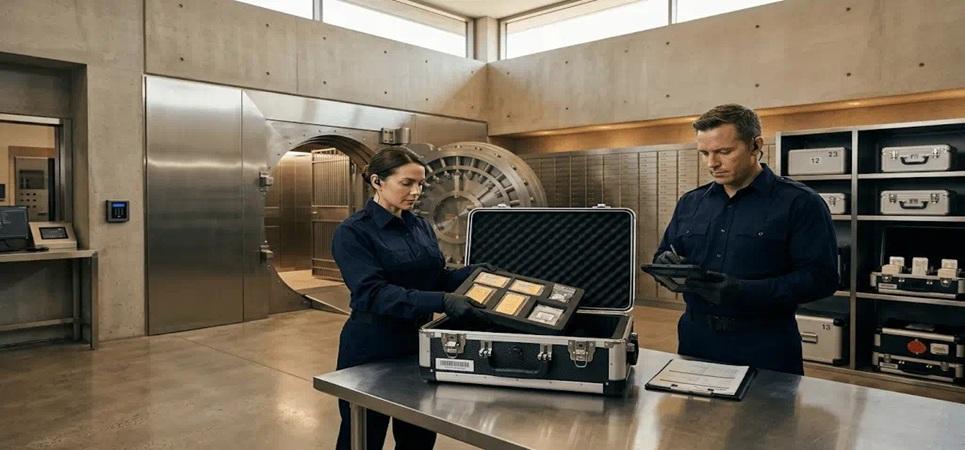
From Vault to Destination: Why Secure Storage Is Essential to Valuables Logistics
Precious metals, fine jewelry, luxury watches, and other high-value items may spend as much time in storage as they do in transit. Shipments may need to wait for customs clearance, a scheduled departure, revised transportation arrangements, or final delivery instructions.
During these intervals, security remains just as important as it is on the road, in the air, or across international borders.
Secure storage is not simply a place to keep valuable goods. It is a critical part of the logistics journey.
At KM Courier Inc., we recognize the importance of viewing valuables logistics as a connected process in which every stage contributes to the protection, control, and successful delivery of a shipment.
Every shipment follows a unique route, and not every journey can be completed in a single, uninterrupted movement.Goods may require temporary storage while awaiting customs documentation, coordination between transport providers, or confirmation of their final destination. Other shipments may require longer-term storage as part of a broader supply chain or inventory management strategy.
For businesses handling high-value commodities, the requirements extend well beyond available warehouse space. The storage environment must be appropriate for the goods being held, with suitable security measures, controlled access, documented handling procedures, and reliable inventory oversight. A well-managed storage arrangement helps businesses maintain continuity throughout the logistics process, even when a shipment must temporarily remain in one location.
The principle is simple: a shipment should remain protected and accounted for, whether it is moving between destinations or securely stored between stages.
When goods carry substantial financial or commercial value, visibility becomes a fundamental part of logistics management. Businesses need confidence that their assets can be accounted for during storage, that movements are properly documented, and that the transition from one stage of the journey to the next is managed with care.
This becomes especially important when shipments pass through multiple facilities, transportation networks, customs checkpoints, or international jurisdictions.
Without coordinated oversight, every additional handover can introduce complexity. Clear procedures for recording receipt, monitoring inventory, authorizing access, and documenting release help reduce uncertainty and support stronger operational accountability. For businesses moving precious metals, jewelry, watches, and other high-value goods, these details matter.
Knowing where a shipment is, who is responsible for it, and what happens next helps turn a complicated logistics operation into a more controlled and transparent process.
Secure storage delivers its greatest value when it is integrated into the wider logistics operation rather than treated as an isolated service. Consider a typical valuables shipment:
Collection → Secure Transportation → Customs Clearance → Secure Storage → Further Transportation → Final Delivery
Each stage serves a purpose. Collection initiates the movement, transportation connects locations, customs procedures support cross-border compliance, and storage provides a controlled environment when the shipment cannot immediately proceed. The journey then continues when the goods are authorized for release and transportation to their next destination.
When these stages are coordinated effectively, businesses can simplify logistics planning, reduce unnecessary handovers, and manage the movement of valuable goods with greater consistency.
An integrated approach can also make it easier to coordinate schedules, communicate requirements, and maintain a clear record of the shipment's progress. For companies operating across borders, this joined-up approach is particularly valuable. It helps connect the different elements of a complex journey while keeping security and accountability central to the process.
A vehicle reaching its destination marks the end of one transportation stage, but it does not necessarily mark the end of the security process. For high-value goods, protection must continue through receipt, inspection where appropriate, storage, inventory management, handling, and eventual release.
Effective security is therefore built around procedures as much as physical facilities.
Depending on the nature of the goods and the service provided, appropriate safeguards may include restricted access, documented custody transfers, inventory reconciliation, controlled release procedures, and suitable facility security measures.
The objective is to maintain a consistent standard of care throughout the period in which the goods are entrusted to the logistics provider or storage facility. Every handover should have a clear purpose. Every movement should follow an established process. Every release should be properly authorized. When these principles are incorporated into daily operations, secure storage becomes an active component of risk management rather than a passive holding point.
Businesses that trade in precious metals, luxury watches, jewelry, and other valuable commodities often face logistics requirements that differ significantly from those associated with ordinary freight. Their shipments may require specialized handling, carefully coordinated transportation, secure holding arrangements, and additional documentation or regulatory considerations.
International movements can introduce further complexity, including customs requirements, varying jurisdictional procedures, and coordination among multiple service providers.
Having a logistics partner that understands the importance of these considerations can help businesses plan more effectively and manage their supply chains with greater confidence.
The right logistics arrangements should reflect the nature of the goods, the route involved, the required timing, and the level of security and oversight appropriate to the shipment.
At KM Courier Inc., our focus is on helping customers understand the importance of a coordinated logistics approach, where transportation, storage, handling, and delivery are considered connected elements of the same journey.
Specific service availability, security arrangements, and handling requirements should always be confirmed for the shipment in question.
The movement of valuable goods involves much more than getting a shipment from Point A to Point B.It requires planning, coordination, appropriate safeguards, and clear procedures at every stage, including the periods when goods are not in transit.
Secure storage bridges the gap between movements. It supports continuity when schedules change, provides a controlled environment while shipments await their next destination, and helps maintain accountability throughout the logistics chain. When storage and transportation work together, businesses can take a more comprehensive view of how their valuable assets are managed from collection through to final delivery.
Ultimately, successful valuables logistics is not defined by transportation alone. It is defined by how well every stage of the journey is connected. At KM Courier Inc., we believe that understanding the complete journey is the first step toward making better-informed logistics decisions.
From the moment valuable goods are collected to the moment they reach their final destination, every stage matters. And when the journey requires a stop along the way, security should never take a break.
Whether you are evaluating transportation options, coordinating international shipments, or exploring secure storage requirements, a clear understanding of your logistics needs is an important place to start.