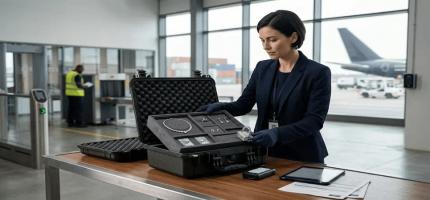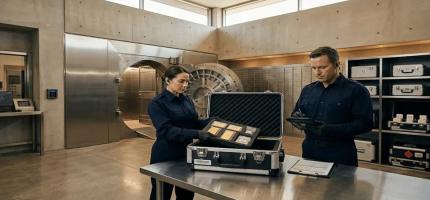
For decades, security has been central to the transportation of valuable goods. While it remains indispensable, the demands of modern commerce extend far beyond protecting a shipment in transit. A shipment may be secure, but is it moving according to schedule? Are the relevant parties informed of its progress? Are customs documentation and regulatory requirements being properly managed? Can each stage of the journey be coordinated effectively across borders, facilities, and transportation partners? These questions reflect a fundamental shift in how businesses evaluate logistics providers. Today, high-value logistics is not simply about moving goods from one location to another. It is about managing the entire journey with discipline, transparency, and accountability. The new high-value logistics equation brings five essential capabilities together.
When goods represent substantial financial value, security must be embedded throughout the logistics process. From initial collection and handling to transportation, storage, and final delivery, every stage requires appropriate safeguards and clearly defined procedures. Risk awareness, controlled handling, trained personnel, and effective coordination all contribute to a more secure operational environment.
Security is not a single checkpoint or isolated measure. It is an ongoing commitment that must remain consistent throughout the shipment lifecycle. For businesses moving precious metals, diamonds, jewelry, and other high-value assets, this commitment is fundamental to protecting both the goods and the confidence of the people who entrust them to a logistics provider.
In modern supply chains, knowing that a shipment is secure is important. Knowing where it is, how it is progressing, and what to expect next is equally valuable. Shipment visibility helps businesses make informed decisions, coordinate operations, manage expectations, and respond more effectively when circumstances change. Through appropriate tracking capabilities, digital reporting, and structured communication, logistics providers can help customers gain a clearer understanding of their shipments throughout the journey. Greater visibility also supports better coordination between stakeholders, reducing information gaps and helping businesses plan with greater confidence. For high-value logistics, visibility is more than a convenience. It is an essential part of operational control.
International logistics operates within a constantly evolving framework of customs procedures, documentation standards, import and export controls, and other applicable regulatory requirements.
For high-value commodities, these considerations can be particularly important. Different jurisdictions may impose different requirements depending on the nature of the goods, their origin, their destination, and the circumstances of the transaction.
A well-coordinated logistics process must account for these requirements from the outset.
Effective documentation management, customs expertise, regulatory awareness, and coordination with the appropriate parties can help reduce avoidable delays and support smoother cross-border movements. Compliance should never be treated as an afterthought. It must be considered an integral part of the logistics strategy, planned, managed, and addressed throughout the journey.
Not all shipments are alike, and high-value goods often require a more specialized approach.
Precious metals, diamonds, fine jewelry, and assets associated with financial services each present distinct operational considerations. Their handling, documentation, security requirements, and international movement may demand knowledge that extends beyond conventional freight transportation.
Specialist expertise helps logistics providers understand these differences and coordinate the appropriate processes for each shipment. It also supports better communication, more informed decision-making, and a clearer understanding of the requirements that matter most to each customer. In high-value logistics, experience is not simply about knowing how to move goods. It is about understanding what is being moved, what is at stake, and what must be done to manage the journey responsibly.
International shipments rarely exist in isolation. They may involve multiple countries, transportation modes, handling facilities, customs authorities, and operational partners.
Without effective coordination, even a well-planned shipment can encounter unnecessary friction.
A more integrated logistics model connects these moving parts through a coordinated process. It brings together the relevant people, procedures, information, and specialist capabilities to help maintain continuity from origin to destination. The objective is to reduce fragmentation, improve communication, and ensure that each stage supports the next. For businesses operating across international markets, this connected approach can make the difference between managing individual transportation tasks and managing the entire logistics journey with greater consistency.
Technology is becoming an increasingly important part of modern logistics.
Digital tracking, improved reporting, data-driven planning, and more efficient information exchange are helping businesses gain greater insight into their supply chains. These capabilities can improve communication, support operational decisions, and make shipment information more accessible to relevant stakeholders.
However, technology alone cannot deliver an effective high-value logistics solution.
A tracking system cannot replace sound operational judgment. Digital documentation does not eliminate the need for regulatory knowledge. Visibility tools are most valuable when supported by reliable procedures and people who understand how to interpret information and respond appropriately. The strongest approach combines technological capability with trained professionals, established processes, specialist knowledge, and effective coordination.
Technology provides insight. Expertise provides context. Operational discipline brings the two together.
For high-value shipments, that combination is critical to building a logistics process that is not only efficient, but also carefully managed and responsive to changing circumstances.
At KM Courier Inc., our approach to high-value logistics is built around the importance of bringing essential capabilities together. Specialized teams, security procedures, technology, regulatory awareness, customs expertise, international coordination, and end-to-end shipment visibility all play a role in supporting a more connected logistics experience.
Rather than viewing transportation as an isolated activity, this approach recognizes that every stage of the journey influences the overall outcome. Planning affects execution. Documentation affects cross-border movement. Communication affects coordination. Security and visibility contribute to confidence throughout the process.
When these elements are aligned, businesses have a stronger foundation for managing the complexities associated with moving valuable goods across international markets. Our focus is on understanding the requirements of each shipment, recognizing the importance of its contents, and coordinating the capabilities needed to support its journey. Because a high-value shipment deserves more than a point-to-point solution. It deserves a considered approach to the entire process.
As supply chains become more interconnected and global trade continues to evolve, businesses need logistics partners who understand the broader operational picture. Choosing a provider solely on transportation capability may overlook other factors that influence the success of a shipment.
A more comprehensive evaluation considers several questions:
These considerations help businesses look beyond the immediate movement of goods and assess the quality of the logistics framework supporting them. For organizations dealing with valuable commodities, this broader perspective can support better planning, stronger coordination, and greater confidence in the movement of their assets.
The next chapter of high-value logistics will not be defined by a single technology, transportation method, or security measure. It will be shaped by the ability to bring multiple capabilities together in a coherent, carefully managed process. Security must work alongside visibility. Compliance must be considered alongside operational planning. Technology must complement human expertise. International coverage must be supported by effective coordination.
The real advantage lies in the connections between these capabilities.
As customer expectations evolve and international supply chains face new challenges, integrated logistics will become increasingly important to businesses that cannot afford to overlook the details.
At KM Courier Inc., we recognize that moving high-value goods is about more than reaching a destination. It is about understanding the journey, managing its complexities, and giving every stage the attention it deserves.
Security. Visibility. Compliance. Expertise. Global coordination.
Five essential capabilities. One connected approach.